

In a world where AI turns coding into a commodity, high agency remains the true differentiator between those who dream and those who ship.
AI Features — experimental
Summarize or translate this post using AI running entirely on your device. No data leaves your browser.
Requires Chrome with Built-in AI APIs enabled.
It’s Christmas Eve morning 2025 and I’m working. My plan is to “empty” my brain into a strategy document for 2026, taking advantage of being free from meetings.
My plan gets interrupted by a service that started throwing a strange error I can’t ignore. The problem is, being an Engineering Manager of 3 teams, I don’t touch the projects directly even though I know roughly what they do. I was one step away from disturbing the engineer who usually handles it, but he was on well-deserved holidays after an intense period.
So I decided to try using AI again for work projects. Until then, I had only used it successfully on small personal projects like this website, but I had always struggled to use it on monorepos and large professional projects like those at Mollie.
I fed Claude Opus 4.5 the exception and project context, using Copilot from the CLI. In less than 20 minutes:
- Claude had written the fix in just a few lines of very readable code;
- I had understood the project better, its software architecture, and why that exception had occurred;
- I had opened the PR waiting for the CI pipeline to pass
Shortly after, I released, verified the error was gone, and spent a peaceful Christmas, but with a new awareness: AI is ready for large professional projects too.
During the holidays, I read a lot about it and realized this feeling is common. Towards the end, a new question arose in me: if producing good quality code is now a commodity accessible to everyone, what’s left for Software Engineers?
🎯 High Agency
While reflecting on this awareness, my brain pulled out from the drawer of memories an essay I had read a few months ago: High Agency in 30 minutes by George Mack.
The author opens with a provocative question:
You wake up in a prison cell in a third world country. You can only call one person you know to get you out. Who do you call?
The person you choose has something special. A spark. That “something” is high agency.
Mack defines it as the combination of three skills rarely found together:
- Clear thinking: without this, you rush into the first bad plan that comes to mind
- Bias towards action: without this, your ideas never leave theory
- Disagreeability: without this, you give up when some authority (your boss or your wife) tells you “No”
I found many references to my philosophy readings, a subject I’m catching up on recently, not having attended classical high school. And I realized these concepts aren’t new: Greek and Roman philosophers had already figured them out two thousand years ago.
🏛️ Plato’s World of Forms
Plato spoke of the world of forms: a non-physical plane where perfect ideas of things exist. The ideal chair. Perfect justice. Absolute beauty. What we touch in the real world? Just imperfect copies of those forms.
The article says ideas are “abundant” and even “useless” without execution. This mirrors the Platonic view: until an idea descends from the realm of thought into action, it remains abstract, sterile. A startup idea, like the idea of a chair, means nothing until it’s built.
⚡ Aristotle and Actualization
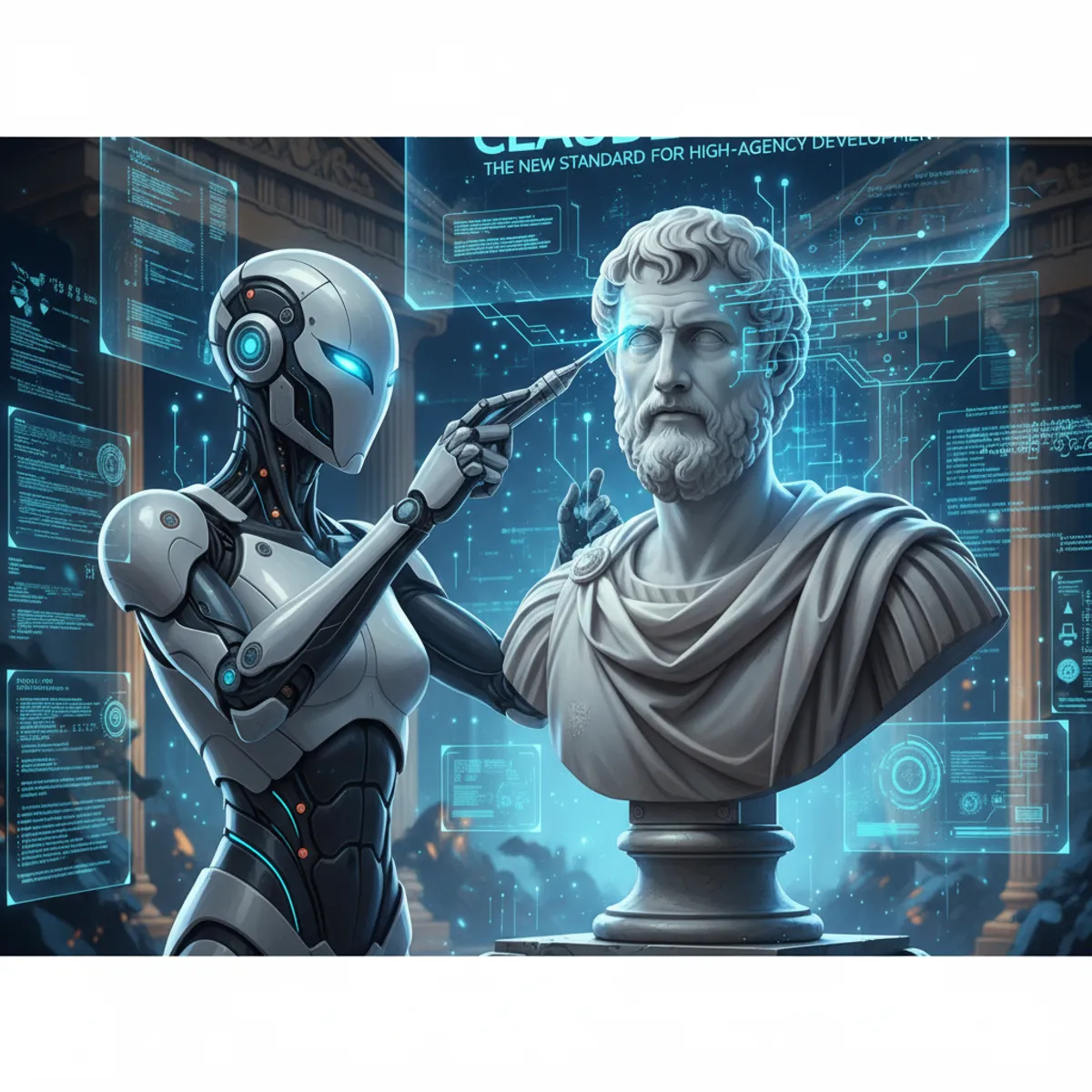
Aristotle introduces the concept of potentiality (dynamis) vs actuality (energeia). A block of marble has the potential to be a statue. But it only becomes a statue through the sculptor’s action.
Translated to our world: you can have the perfect product idea in your head, but until you start building it, you just have marble.
🔥 Seneca and the Urgency of Action
Seneca was obsessed with the gap between conception and action. For him, philosophy wasn’t armchair theorizing, it was a practical tool for living. He wrote:
“It is not that we have a short time to live, but that we waste a lot of it.”
My smartphone trembled in my hand when I read it: guilty as charged, your honor.
The article distinguishes between “talkers” and “doers”. Seneca would say that ideas without execution waste time and life. He would have endorsed the High Agency principle: prioritizing movement through resistance, meaning choosing execution over comfort or perfection.
🤖 AI as the Bridge Between Two Worlds
This is where AI changes everything.
Before Claude, Cursor, Copilot, turning an idea into code required:
- Years of practice
- Deep knowledge of languages and frameworks
- Hours of debugging and Stack Overflow
- An extremely high frustration threshold
Today? AI has become the bridge between the world of ideas and the real world. It’s the universal chisel that allows anyone to transform potential into actual.
But, and here’s the point, the chisel alone sculpts nothing.
🚀 The Real Differentiator
If everyone has access to the same magic chisel, what separates those who create from those who just watch?
High agency.
High agency means not waiting for the perfect moment (spoiler: it doesn’t exist). It means being responsible for the outcome instead of being at the mercy of circumstances. It means that when someone tells you “no”, that’s the beginning of the conversation, not the end.
AI gives you the chisel. But you’re the one who must decide to get up, grab that block of marble, and start sculpting.
💡 Conclusion: It’s Never Just Writing Code
Putting the pieces together:
- Plato explains where ideas live (in the abstract plane)
- Aristotle explains how they become real (through action)
- Seneca urges you to do it NOW, or you’re wasting your life
- AI tears down the last technical barrier
In a world where writing code is accessible to everyone, you need to focus on what brings an idea to execution. And it’s almost never just writing code.
This is why I believe the future belongs to Product Engineers: people who own a feature or product end-to-end. For them, code is just one of the tools in the drawer. They talk to users. They understand the business. They design the experience. They measure the impact. And yes, they write code too, or rather, they have AI write it.
It’s the vision. It’s the perseverance. It’s the ability to ask the right questions. It’s continuous iteration. It’s the courage to release something imperfect and improve it.
I want to share some optimism about what awaits us as Software Engineers in the AI era: now is the time to dream big, but above all to do. Because “doing” has never been easier.
After all, staying optimistic is the most logical and pragmatic thing to do, as I say in my story.